






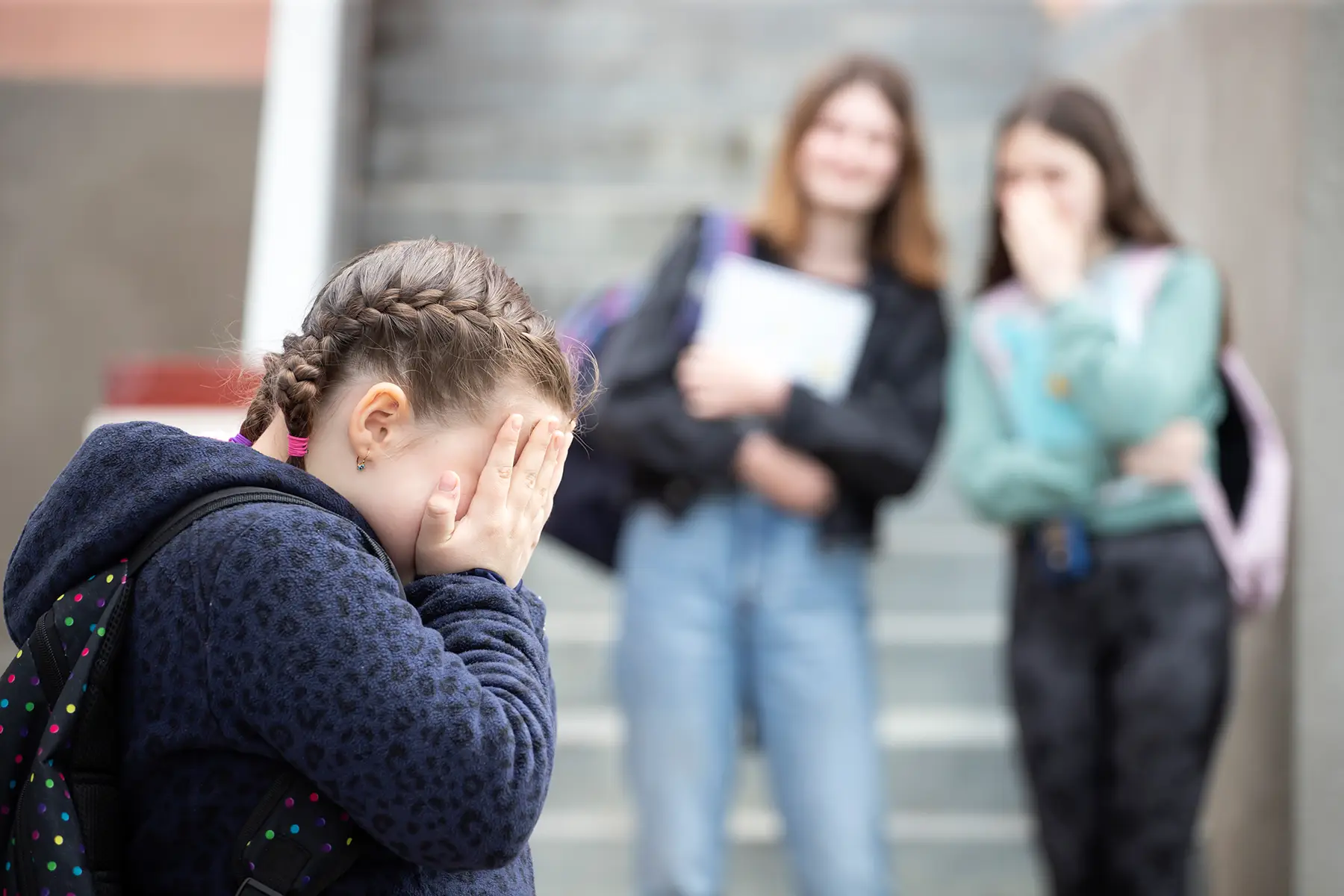
Bullying at school can deeply affect a child’s well-being. As a parent, it is normal to feel helpless when you see your child come home sad, anxious, or distressed. However, your role is crucial: listening to what they are experiencing, supporting them, and working with the school to put an end to the bullying situation.
Recognizing bullying
Bullying is defined as any behavior, word, act, or gesture—intentional or not—that is repetitive in nature, expressed directly or indirectly, including in cyberspace, within a context characterized by an imbalance of power between the individuals involved, and that results in distress or causes harm, injury, oppression, or exclusion.
To recognize a situation of bullying, you need to take the time to think about it and TAKE ACTION!
ACTION is a word that helps recognize bullying:
A: Actions, intentional or not
C: Continues over time
T: Targeted behaviour
I: Imbalance of power
O: Ongoing harm
N: Not okay
Bullying can take different forms: physical (violent actions), verbal (hurtful words), social (exclusion or humiliation), and material (theft or damage of belongings). Regardless of the form, it causes harm and may make the person feel sad, hurt, or isolated.
The difference between conflict and bullying
A conflict occurs when two people disagree and argue over something specific. There is usually no imbalance of power, and the individuals involved may be or have been friends. A conflict generally causes negative emotions for both parties. Understanding the difference between conflict and bullying helps parents and schools choose the most appropriate intervention and respond quickly to each child’s needs.
What are the signs that my child may be a victim of bullying?
When a child is being bullied, certain signs may appear, and their behavior may change in some ways. One or more of the following signs may help you recognize whether your child is possibly facing a situation of bullying or violence. However, it is important to note that these signs may also be due to other causes. In any case, an open and supportive conversation with your child remains essential to better understand the situation.
Possible signs:
- Often sad, irritable, or appears unhappy;
- Loses interest in favorite activities;
- Refuses to go to school or places like malls or playgrounds;
- Frequently says they don’t feel well or feel sick;
- Withdraws or becomes more secretive;
- School performance declines without clear reason;
- Stops using the internet or becomes anxious after using it;
- Reports lost or stolen belongings;
- Has trouble sleeping;
- Comes home with dirty clothes or injuries;
- Puts themselves down or feels inferior to others.
How to help your child experiencing bullying?
To support your child during this difficult time, it’s important to act quickly while remaining calm and patient. Here are some steps you can take to support them and help them get through this situation:
Listen to your child and show them your support
- Ask open-ended questions to learn more;
- Let them speak at their own pace without judgment;
- Reassure them that you are there to help.
Assess the situation together
- Ask them what they’ve tried to do to make the situation stop;
- Encourage them to name their feelings and focus on their strengths;
- Identify allies with them, such as friends, whom they can count on;
- Talk with them about their relationship with the bully (proximity, frequency of contact, situations where they cross paths).
Work together to find a solution and take action
- Ask them what they want to do and involve them in finding a solution to give them back control over the situation;
- Also contact the school: notify their teacher and the school administration, then ask for a follow-up;
- Do not attempt to resolve the situation yourself directly with the bully or their parent. School staff are authorized to handle these interventions;
- If you notice that the situation is affecting your child, inform the school administration. They can support you and, if necessary, mobilize the professionals or support staff outlined in the anti-bullying and anti-violence plan.
The anti-bullying and anti-violence plan
All schools in Quebec must implement an anti-bullying and anti-violence plan to ensure a healthy and safe environment for students. This plan outlines how the school prevents, detects, and intervenes when bullying occurs.
The plan is not only for responding to problematic behavior. It also includes prevention, education, and support measures for all those involved.
Steps to take when a bullying incident is reported
When the school is informed of a bullying situation—by a student, parent, witness, or staff member—the following steps are generally taken:
1. Gather information confidentially
A trusted adult or staff member meets with the student involved to understand what happened. They listen carefully, ask questions, and gather relevant information (actions taken, people involved, context, impact).
The goal is to understand the situation without judgment and to ensure the child’s immediate safety.
2. Analyze the situation
The school team discusses the facts gathered and assesses the seriousness of the situation. They analyze:
- the nature of the actions;
- the frequency of the bullying;
- the power dynamic;
- the consequences suffered by the targeted individual;
- the needs of the students involved.
This analysis helps determine whether the situation constitutes a conflict, a bullying incident, an isolated incident, or an act of violence.
3. Inform the administration
The administration is notified promptly. It plays a central role in coordinating interventions, documenting the facts, and ensuring compliance with the anti-bullying and anti-violence plan.
4. Choose appropriate interventions
Depending on the severity of the situation, the school may:
- intervene directly with the students involved;
- provide psychosocial support;
- communicate with parents;
- implement support or guidance measures;
- propose restorative actions;
- put in place the necessary measures to ensure the safety and well-being of the targeted student.
The anti-bullying and anti-violence plan aims to prevent and stop bullying situations, as well as maintain a healthy and safe school climate. Educational initiatives are emphasized to enable students to learn from these situations and reduce the risk of recurrence.
5. Conduct regular follow-ups
Even after the initial interventions, the school conducts follow-ups to:
- verify if the bullying has stopped;
- support the student victim;
- guide the perpetrator;
- adjust the measures if necessary.
If the situation persists, further action is taken.
What to do if you are dissatisfied?
If a parent feels that the bullying situation is not being handled adequately, or that the school has not acted in accordance with its anti-bullying and anti-violence plan, there is an official complaint process recognized throughout Quebec.
Step 1 – The School
The parent first contacts:
- the teacher;
- a school support worker;
- the school administration.
Most situations are resolved at this stage.
Step 2 – The School Service Centre (CSS) or the School Board (CS)
Before filing a formal complaint, the parent can first contact the liaison officer appointed by the CSS for the School Climate, Violence, and Bullying file. This person can act as an intermediary, listen to the parent, and suggest possible solutions to both the school and the parent, in order to facilitate a resolution that is satisfactory for all parties.
If, despite this step, the response received remains insufficient, the parent can then file a complaint with the School Service Centre’s (CSS) or School Board’s (CS) complaints officer. The officer will review the case, communicate with the relevant parties, and propose solutions to move the situation forward.
Step 3 – The National Student Ombudsperson (NSO)
If, after the intervention of the CSS/CS, the parent believes the situation is still unresolved, they can contact the National Student Ombudsperson (NSO).
The NSO:
- acts independently;
- reviews the handling of the complaint;
- may recommend corrective measures to the CSS/CS.
This process aims to ensure that children’s rights are respected.
Confidentiality
Confidentiality is a fundamental principle of the process. The goal is to protect the student and safeguard their well-being.
For the victim, the school commits to:
- protecting the information provided by the victim or those who reported the situation;
- preventing the student from being exposed or stigmatized;
- sharing information only with those who need to intervene.
Confidentiality also applies to the student who has committed acts of bullying, as the school also has a responsibility to protect this student.
The school must:
- treat their identity confidentially;
- communicate only the necessary information to the parents concerned;
- promote educational action that respects the rights of all students.
No parent has legal access to the identity of another student or to disciplinary details concerning them, except in situations governed by law.
When does the police intervene in a bullying situation?
The Criminal Code of Canada lists the offenses prohibited in the country. A person can be arrested by the police and face criminal charges starting at age 12.
When a bully crosses the line and commits a criminal offense (e.g., threats, assault, etc.), it is possible to report the incident to the police. This step aims to ensure the safety of the targeted person and to stop the offense.
There are several criminal offenses associated with bullying, and it is important for parents to be aware of them. A description of the main criminal offenses is available here, and for more information on filing a police report, visit this section.
What should I do if my child is a bully?
Learning that your child has bullied others can be difficult. However, this behavior can occur in young people of all ages and backgrounds, sometimes without them realizing the real impact of their actions. Parental support is essential: recognizing the signs, intervening quickly, and offering appropriate support helps the child develop more respectful behaviors.
Recognizing the signs
Certain clues may indicate that a young person is engaging in bullying behavior, such as:
- a strong need to dominate or maintain their place in a group;
- difficulties with relationships or fitting in;
- the belief that violence or bullying are effective ways to resolve a conflict;
- a tendency to perceive others as hostile;
- impulsive reactions.
Some young people may also lack empathy, display false self-confidence, or show little remorse. These signs may indicate that the child needs guidance and help to interact better with others.
Starting the conversation
If the school or another adult reports a bullying incident, it’s important to talk calmly with your child about it. As a parent, you can:
- stay open and listen;
- explain the seriousness and consequences of the actions taken;
- help them understand what triggers their behavior;
- work with them to find ways to express their emotions or get what they want without harming others;
- remind them of the importance of respect and empathy in their relationships.
It is also important to remain attentive to peer influence and the child’s activities during their free time.
Seek help if needed
If the behaviors persist or if the parent wishes to obtain additional support, the first step is to discuss the child’s needs with their teacher or the school administration. Depending on the situation, the administration may then refer the student to appropriate services, such as psychoeducation, social work, psychology, or other school resources. These professionals can support the child in developing social and interpersonal skills and help them better cope with the situation.
Finally, the child must feel that they are not alone: even though they must take responsibility for their actions, they can also learn to change with the help of the adults around them.
What should I do if my child witnesses bullying?
If your child witnesses bullying and tells you about it, let them know that they did the right thing by confiding in you. Explain that they can play an important role in helping the person being bullied and that the key is not to stand by and do nothing.
Help them by reminding them that:
- It’s normal to feel uncomfortable in this type of situation;
- It’s important never to laugh or encourage the situation;
- They can show their support for the victim, for example, by offering to go with them to report the situation;
- If they feel capable, they can tell the bully that they do not approve of their behavior;
- It is important that the bullying incident be reported to an adult at the school. The young witness can do this themselves, or the parent can contact the school when a child reports having witnessed the incident. This ensures that those involved receive the necessary help.
Working together for the well-being of our youth
Bullying is a difficult experience, both for the child who is being bullied and for the parent supporting them. Fortunately, no one has to face this situation alone. By recognizing the signs, staying attentive, and working in partnership with the school, every parent can play an important role in protecting their child and fostering a healthy school environment. Whether your child is a victim, a witness, or a perpetrator of bullying, they need your presence, your kindness, and your commitment. Together, we can help build a safer, more respectful, and more inclusive school environment for all students.
Other contents of the guide






Resources for parents
Tel-jeunes Parents is there for you! To listen, to reflect on your situation, or to make known the services and resources available for your teen.